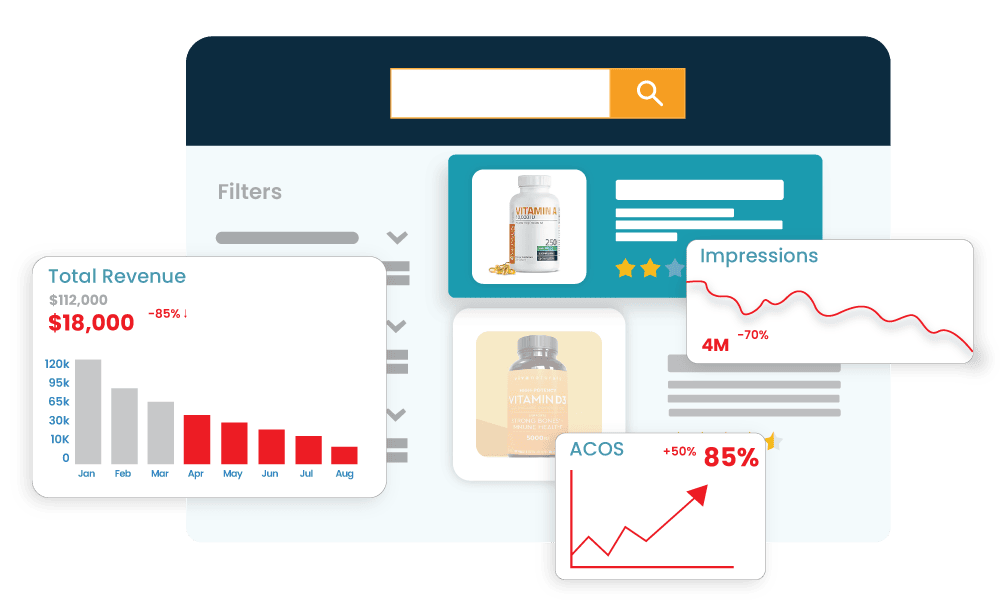

If you sell on Amazon, you have probably looked at your PPC dashboard and wondered, “My ACoS looks fine, so why is growth slowing down?” That is where most sellers get stuck.
Many brands focus only on lowering ACoS numbers, thinking it automatically means better performance. Lower ACoS is not always a win. If ads become too conservative, products can lose traffic, rankings, and organic momentum over time.
This is why the debate around Amazon TACoS vs ACoS matters so much.
Both are important Amazon PPC profitability metrics, but they measure very different things. In this blog, we’ll break down what they mean and which metric should actually guide smarter PPC decisions.
Why Amazon PPC Metrics Often Mislead Sellers
One of the biggest mistakes Amazon sellers make is treating ACoS like the only number that matters. A campaign might show a low ACoS, but that does not always mean the business is actually growing. In some cases, the product may slowly lose organic rankings and visibility even while the ad numbers look “good.”
At the same time, some campaigns with a slightly higher ACoS can still help increase total sales and improve long-term profitability. The reason is simple. Many sellers focus only on ad performance without looking at the bigger business picture.
The issue is not the metric itself. The real problem is using the wrong metric for the wrong goal. If the only goal is cutting ad spend, then ACoS can look perfect. But if the goal is growing the brand and improving total profitability, there is a lot more to consider.
What Is ACoS in Amazon Advertising?
ACoS is short for Advertising Cost of Sales. In Amazon PPC, it’s used to measure how much ad spend goes into generating sales. In simple words, it tells you whether your ads are costing too much or performing efficiently.
The formula is:
ACoS = Ad Spend ÷ Ad Revenue × 100
So if a campaign spends $20 and makes $100 in sales, the ACoS would come out to 20%.
That’s why sellers keep watching this number closely. It gives a quick idea of whether a campaign is healthy or if ad costs are starting to get out of control.
When ACoS Is Helpful
ACoS works well for:
- Managing ad budgets.
- Optimizing keywords.
- Improving campaign efficiency.
- Finding poor-performing ads.
This is why many sellers constantly try to reduce ACoS and Amazon advertising costs.

Limitations of ACoS
The problem is that ACoS only measures ad-attributed sales.
It does not measure:
- Organic sales growth.
- Long-term visibility.
- Keyword ranking improvements.
- Overall account health.
Some sellers lower bids too much just to improve ACoS numbers. It may reduce ad costs for a while, but it can also slow traffic and make growth harder later on.
What Is TACoS Amazon PPC
TACoS stands for Total Advertising Cost of Sales.
The formula is:
TACoS = Ad Spend ÷ Total Revenue × 100
Unlike ACoS, TACoS includes both ad sales and organic sales. This is why TACoS gives a much broader view of overall profitability. If you are wondering how to calculate TACoS Amazon, the process is simple. You divide total ad spend by total account revenue, then multiply by 100.
TACoS Reflects Long-Term Growth
TACoS helps sellers understand whether PPC is improving the entire business, not just ad performance.
For example:
- Are ads helping organic rankings improve?
- Is total revenue growing faster than ad spend?
- Is the business becoming less dependent on paid traffic over time?
These are the bigger questions TACoS helps answer.
TACoS Matters for Scaling Brands
For growing Amazon brands, TACoS is often a stronger long-term metric because it focuses on:
- Overall profitability
- Organic sales growth
- Long-term scaling
- Sustainable advertising performance
It helps sellers understand whether ads are building momentum or simply generating temporary sales.
Amazon TACoS vs ACoS: The Core Difference
The easiest way to understand Amazon TACoS vs ACoS is by comparing what each metric actually measures.
Metric | ACoS | TACoS |
Full Form | Advertising Cost of Sales | Total Advertising Cost of Sales |
Formula | Ad Spend ÷ Ad Revenue × 100 | Ad Spend ÷ Total Revenue × 100 |
Measures | Ad campaign efficiency | Overall business profitability |
Focus Area | Paid sales only | Paid + organic sales |
Best Used For | Campaign optimization | Long-term growth tracking |
Helps Answer | “Are my ads profitable?” | “Are my ads helping the business grow?” |
Main Goal | Reduce wasted ad spend | Improve total account performance |
Limitation | Ignores organic growth | Less useful for keyword-level optimization |
Which Metric Should Actually Drive Your PPC Decisions
For most scaling Amazon brands, TACoS is usually the more valuable long-term metric. That does not mean ACoS becomes useless. ACoS is still important for campaign optimization and controlling wasted spend.
But TACoS provides the bigger picture. Brands that focus only on ACoS often become too conservative with advertising. They cut bids, reduce visibility, and limit growth opportunities just to maintain “good-looking” numbers.
Meanwhile, brands that monitor TACoS can better understand whether their advertising is improving total business performance.
The smartest sellers usually use both metrics together. They use:
- ACoS for campaign optimization.
- TACoS for overall business strategy.
That balance is what makes Amazon PPC profitability metrics actually useful.
Conclusion
At the end of the day, Amazon PPC is not only about getting lower numbers on your ad dashboard. A low ACoS may look great, but it does not always mean your business is growing the right way. That is why looking at TACoS matters too. It helps sellers understand how ads are affecting overall sales, organic growth, and long-term profitability. The brands that usually perform best are the ones that know how to balance both metrics instead of relying on just one.
At Lezzat, we work with brands to build PPC strategies that focus on long-term growth, not just short-term ad performance. If you want your Amazon ads to support real business growth, not just better-looking metrics, we’d love to talk.